


Your New Jersey commercial property’s landscape is your first impression. During the hot, humid New Jersey summer, grass gets stressed from heat, foot traffic, and inconsistent watering. Gras Lawn has spent over a decade managing lawns across NJ commercial properties.retail centers, office parks, apartment complexes, industrial sites. We know what works. Proper summer turf management prevents brown patches, controls weeds, and keeps your property looking professional when it matters most.
Why Summer is Make-or-Break for Your Lawn
Summer stress is real. Between July heat waves, occasional drought, and heavy foot traffic from customers and employees, your grass is working overtime. New Jersey’s hot, humid summers (often 85-95°F with 70%+ humidity) create the perfect environment for disease, heat stress, and weed invasion.
If you skip proper summer care now, you’re setting up for problems: thin patches that invite weeds, disease that spreads through fall, and a property that looks neglected. Commercial tenants and customers notice. Your lawn is part of your brand, whether you’re managing a shopping center, office building, or apartment complex.
Gras Lawn’s summer turf management program is designed specifically for New Jersey’s climate and commercial property demands.
Core Summer Turf Management Strategies
Irrigation and Watering Schedules
Proper watering is the foundation of summer lawn care. Most commercial property managers underwater or water at the wrong time.
Here’s what works in New Jersey: water deeply and less frequently. A 1-inch application, 1-2 times per week, encourages deep root growth. Shallow daily watering creates weak, thatch-prone grass that’s vulnerable to disease. Water early morning (5-7 AM) to minimize evaporation and disease risk.
Gras Lawn designs and maintains irrigation systems across New Jersey commercial properties. We handle system audits, zone optimization, and seasonal adjustments. Many properties waste 30-40% of water due to misaligned heads, leaks, or poor scheduling. Our irrigation assessments catch these issues fast.
Mowing Height and Frequency
In summer, raise your mowing height to 3.5-4 inches. Taller grass shades the soil, retains moisture, and crowds out weeds. Never remove more than 1/3 of the blade in a single mow. Mowing too short stresses the plant and invites disease.
Mow 1-2 times per week depending on growth rate. Consistency matters more than rigid schedules. Dull mower blades tear grass, creating brown tips and disease entry points. Sharp blades are essential.
Heat and Drought Stress Management
Summer heat stress weakens turf. If your property is showing brown patches or thin areas, stress is winning. Aeration in spring helps, but summer maintenance prevents additional damage.
Apply a light topdressing of compost in early July. This cools the soil, retains moisture, and introduces beneficial microorganisms. It’s not expensive but makes a measurable difference by August.
Watch for brown patch disease, especially in humid afternoons. If you see circular brown spots, that’s fungal. Get ahead of it with proper airflow, watering schedules, and fungicide if needed.
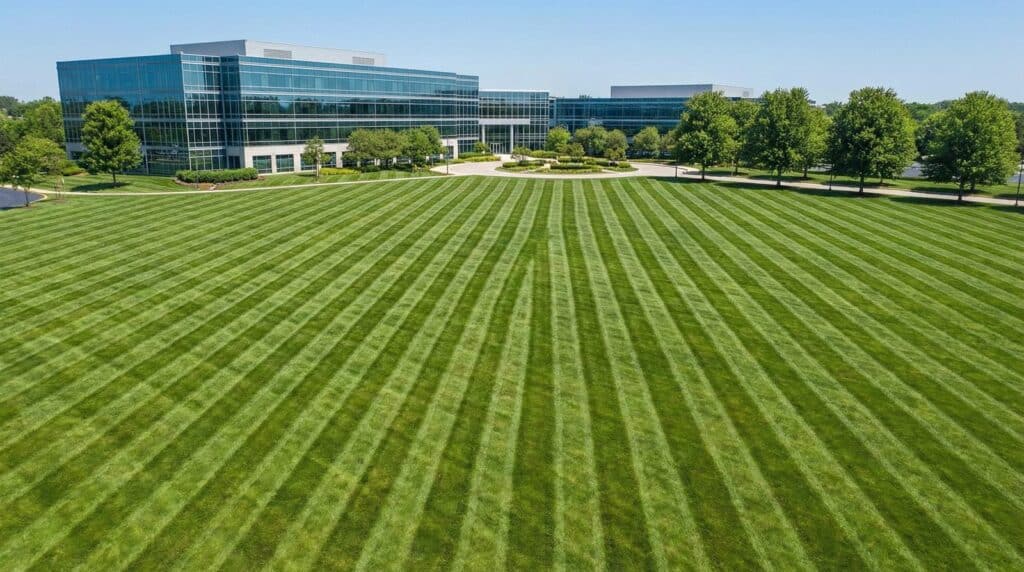
Weed Control in Summer Heat
Weeds multiply in summer. New Jersey’s heat and humidity create ideal conditions for crabgrass, clover, and broadleaf weeds.
Post-emergent herbicide applications work in summer, but timing and product choice matter. Applying herbicide during peak heat (above 85°F) can stress the turf. Early morning or late afternoon applications are safer.
Gras Lawn uses selective herbicides that target weeds without harming desirable turf. We integrate chemical and cultural controls: proper mowing height, overseeding in fall, and mulching in landscape beds all reduce weed pressure without relying solely on chemicals.
Fertilizer and Nutrition for Summer
Summer nitrogen feeding is a common mistake. Heavy nitrogen in summer promotes lush growth that’s softer and more disease-prone. Instead, apply lighter, balanced fertilizer in summer and save heavy feeding for spring and fall.
A light application of potassium in July and August improves heat and drought tolerance. This is what Gras Lawn uses for maintenance clients across New Jersey: balanced fertility that keeps grass healthy without overfeeding.
Soil testing (once every 2-3 years) tells you exactly what your property needs. Many New Jersey commercial properties are over-fertilized and contribute to runoff issues.
Disease and Pest Management
Summer diseases include brown patch (circular brown spots), dollar spot (small tan patches), and gray leaf spot (in cool, wet years). Early detection and quick response prevent them from spreading.
Proper irrigation timing (morning only), mowing height, and air circulation prevent most disease. If disease does appear, fungicide applications work best when caught early.
Chinch bugs and sod webworms are common summer pests. You’ll see damage as irregular yellow or dead patches. Treatment depends on the pest and the growth stage. Gras Lawn monitors for these proactively so we catch them before they spread.
Fall Prep Starts in Summer
Summer isn’t just about surviving the heat, it’s about setting up for fall overseeding and spring strength. If your lawn is thin or weak in July, overseed in September and October. Healthy turf in September means fewer weeds and disease next spring.
Frequently Asked Questions
How often should I water my commercial lawn in summer?
Deep, infrequent watering is better than shallow daily watering. Aim for 1 inch per week, applied 1-2 times per week early in the morning. Adjust based on rainfall and heat. Gras Lawn’s irrigation specialists can design a schedule custom to your property’s sun exposure and soil type.
Can I apply herbicide in peak summer heat?
Yes, but timing matters. Apply post-emergent herbicides in early morning or late afternoon when it’s below 85°F. Peak heat applications can damage desirable turf. Pre-emergent herbicides are applied in spring, not summer.
What if my lawn has thin patches by mid-July?
Thin patches are often caused by compaction, poor drainage, heat stress, or disease. Visual inspection tells us what’s happening. Sometimes it’s as simple as adjusting irrigation or mowing height. Other times, aeration and overseeding in fall is the fix. Gras Lawn diagnoses the cause and builds a remedy.
Is summer fertilizer application a good idea?
Light, balanced fertilizer in summer can help, but avoid heavy nitrogen. Heavy feeding in summer promotes soft growth that’s more disease-prone. Potassium applications in July-August improve heat tolerance. Fall feeding (September-October) is more beneficial for spring growth.
How do I prevent brown patch disease on my New Jersey property?
Brown patch thrives in high heat and humidity, especially with poor air circulation and evening watering. Prevention includes watering in the morning (never in evening), maintaining proper mowing height (3.5-4 inches), ensuring air circulation with strategic trimming, and applying balanced fertilizer, not heavy nitrogen. Fungicide is a last resort if disease appears despite these steps.
Get Expert Summer Turf Management for Your New Jersey Property
Your New Jersey commercial property deserves expert turf management. Gras Lawn manages lawns for retail centers, office parks, and apartment complexes across New Jersey, Connecticut, Delaware, Pennsylvania, Florida, and Maryland. Our summer turf management program keeps your property professional, healthy, and damage-free through peak season.
Schedule a free property audit. We’ll assess your irrigation, turf health, soil conditions, and current challenges. Then we build a maintenance plan custom to your property’s needs.
Contact Gras Lawn today for New Jersey commercial lawn care.