


Commercial Ice Management and Snow Removal in Maryland: Winter Readiness Guide
Maryland’s winters bring unpredictable ice storms, heavy snow, and hazardous conditions that threaten commercial property operations, tenant safety, and liability. Unlike seasonal snowfall in New England, Maryland property managers face a volatile mix of rain, freezing temperatures, and rapid weather shifts. A single ice accumulation event can close parking lots, disable loading docks, and create slip-and-fall risks that expose businesses to lawsuits.
Gras Lawn provides comprehensive ice management and snow removal services across Maryland, ensuring that commercial properties in Baltimore, Annapolis, Towson, Columbia, and beyond stay operational, accessible, and compliant with property liability codes. Our winter readiness strategy begins months before the first freeze, using predictive forecasting, preseason equipment staging, and rapid-response crews positioned across Maryland to handle everything from light frost to major ice storms.
Why Maryland Properties Need Specialized Ice Management
Maryland experiences 15-25 inches of annual precipitation, with significant portions falling as snow or freezing rain between November and April. The state’s geographic position between the Atlantic and the continental interior creates distinct winter challenges that differ from northern states and southern regions.
Freezing rain events coat surfaces with transparent ice that’s difficult to detect and extremely slippery. This glaze ice can be a quarter-inch thick or more, creating a skating rink effect that renders parking lots and walkways impassable. Unlike snow, which is visible and can be plowed, ice requires specialized deicing products and equipment. Many property managers underestimate the hazard because ice doesn’t always appear accumulating on surfaces, yet the risk is highest when conditions are least visible.
Rapid temperature swings create another distinct Maryland challenge. The state experiences freeze-thaw cycles where temperatures drop to 25 degrees overnight, creating ice on parking lots and sidewalks, then rise to 45 degrees during the day, which melts the surface layer but refreezes as temperatures drop again after sunset. This cycle can occur multiple times in a single week, requiring both pretreatment and reactive response strategies.
Maryland Common Law holds property owners strictly liable for injuries resulting from negligent snow and ice removal. Property managers cannot rely on the “natural accumulation doctrine” that protects property owners in some northern states. Failure to maintain safe parking lots, walkways, loading areas, and ADA-accessible routes creates significant legal exposure. Insurance carriers have become increasingly cautious about covering liability claims when property owners failed to hire professional ice removal services.

Gras Lawn’s ice management strategy begins in October with preseason equipment checks, transitions to pretreatment weeks before winter storms arrive, and maintains rapid-response crews throughout the season. We document every operation so that property managers have proof of professional maintenance in the event of liability disputes.
Pre-Season Ice Management Planning: October Through November
Preparing for Maryland winters means starting in fall, not waiting until the first snow. Professional ice management requires three months of advance preparation: equipment testing, material stockpiling, and crew training.
Equipment Inspection and Calibration
All snow removal and de-icing equipment requires testing and maintenance before winter. Plow blades must be sharp and properly angled to cut through ice and asphalt without gouging pavement. Salt spreaders and material hoppers need calibration to apply the correct volume of de-icing product; underspreading leaves ice, overspreading wastes material and contaminates groundwater.
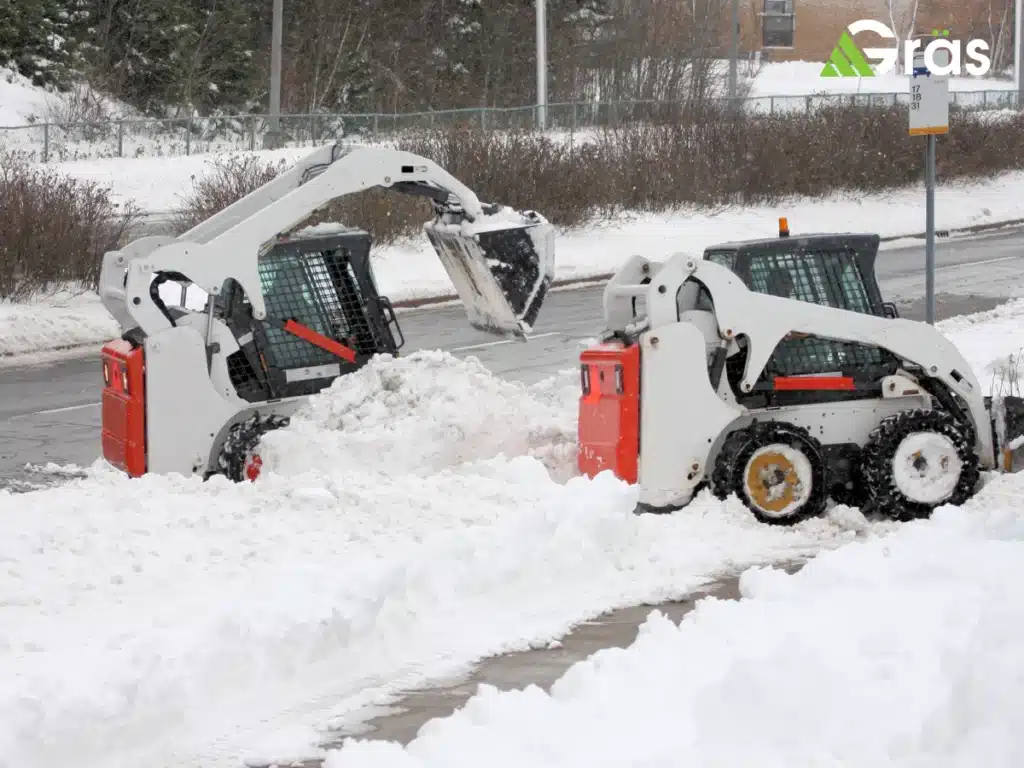
Sidewalk clearance equipment, including walk-behind snow blowers, ice chippers, and push shovels, must be serviced, fueled, and staged at each property. Gras Lawn positions backup equipment at strategically located properties so that a single equipment failure doesn’t delay critical ice removal operations.
We also service de-icing equipment with fresh hydraulic fluid, check hose connections for leaks, and test hydraulic systems under load. Equipment breakdowns during active ice removal create cascading delays across multiple properties, so preventive maintenance is a priority.
De-icing Product Selection and Stockpiling
Rock salt remains the most cost-effective de-icing product for large parking lots and roadways in Maryland. However, salt has significant limitations: it’s ineffective below 15 degrees Fahrenheit, and sodium chloride runoff damages landscaping, soil chemistry, and vehicle undercarriages. Additionally, salt can cause surface spalling on concrete if applied too heavily or if freeze-thaw cycles occur rapidly.
Modern professional ice management pairs rock salt with calcium chloride and magnesium chloride blends that work in temperatures approaching zero and break down more safely than straight sodium chloride. For specialized applications like walkways, loading docks, and pool decks where concrete damage is a concern, Gras Lawn recommends calcium chloride or specialty ice melt products that are gentler on surfaces and create less environmental impact.
Preseason stockpiling of de-icing materials is critical for Maryland properties. Historical data shows that Maryland experiences 5-10 significant winter weather events annually. Each major storm event can consume 500-2,000 pounds of salt or treated aggregates depending on parking lot size and application intensity. Waiting to purchase materials until winter arrives creates three problems: supply shortages that cause delivery delays, price inflation during peak season, and transportation bottlenecks when all properties are competing for limited inventory.
Gras Lawn purchases de-icing materials in July and August, negotiates volume pricing directly with suppliers, and maintains dedicated storage at regional depots. This advance purchasing strategy ensures product availability and reduces material costs by 15-20% compared to emergency winter purchases.
Crew Scheduling and Training
Ice removal operations during major storms often require 12-16 hour shifts with multiple crews working simultaneously across dozens of properties. Gras Lawn recruits and trains additional crew members during fall, ensuring that we have sufficient personnel to deploy rapidly when winter weather strikes.
Our crews receive training on safe equipment operation, proper application of de-icing materials, and hazard recognition for ice-coated surfaces. Safety briefings before each storm ensure that crew members understand property-specific hazards, ADA requirements, and customer communication protocols.
Rapid-Response Ice Removal Operations: Storm to Completion
When winter weather strikes Maryland, the response window is critical. Accumulating ice must be removed within hours, not days, or property liability exposure grows exponentially and operational disruptions compound.
Real-Time Storm Monitoring and Activation
Gras Lawn monitors weather data continuously throughout winter, tracking precipitation forecasts, temperature curves, wind patterns, and atmospheric pressure. Our meteorological team reviews storm tracks and timing to predict which properties will be most affected and when ice removal operations should begin.
When a winter storm enters Maryland airspace, our operations team activates response protocols based on customer service agreements. For properties with 24-hour response agreements, ice removal crews deploy within two hours of storm onset or notification. For standard service agreements, removal begins immediately after precipitation ends and ice begins to set, typically within one to three hours depending on storm intensity.
Pretreatment Strategy: Prevent Before You Remove
The most cost-effective ice removal strategy is pretreatment. Before a winter storm reaches Maryland, Gras Lawn applies liquid de-icing solutions or treated salt to parking lots, walkways, and loading areas. This preventive coating prevents ice from bonding strongly to concrete and asphalt surfaces, making subsequent removal faster, more complete, and less likely to cause surface damage.
Pretreatment reduces the overall volume of material needed for ice removal operations and minimizes mechanical damage to surfaces from aggressive chipping, scraping, and plowing. Property owners who skip pretreatment typically spend 20-30% more on reactive removal after ice has bonded to pavement.
Progressive Removal Operations and Prioritization
Ice removal follows a staged approach that balances safety with resource availability. Main traffic areas and primary parking lots receive attention first, ensuring that tenants can access buildings and park vehicles safely. Emergency exits, fire lanes, and ADA-accessible routes follow immediately, as these areas have legal compliance requirements.
Secondary parking areas, perimeter lots, and less-trafficked zones are cleared on a schedule that aligns with customer priorities and crew availability. Gras Lawn coordinates with Maryland property managers to ensure that the removal sequence supports tenant operations, emergency access, and liability reduction.
Liability, Code Compliance, and Documentation
Maryland property law places the burden of safe premises squarely on property owners and managers. Understanding your legal obligations and maintaining detailed documentation is critical to reducing liability exposure.
Legal Liability Standards Under Maryland Law
Under Maryland Common Law, property owners are responsible for maintaining safe premises for tenants, employees, and invitees. Courts have found owners liable in cases where ice or snow was permitted to accumulate, even if conditions were considered “natural” and unforeseeable. The standard of care requires regular removal and maintenance of safe conditions, regardless of weather cause.
Documented evidence of professional snow and ice removal services significantly strengthens your liability defense. In the event of a slip-and-fall injury claim, written contracts and service records demonstrate that the property owner took reasonable precautions and hired qualified professionals to manage winter hazards.
Detailed Service Documentation and Record Keeping
Gras Lawn provides detailed service reports for every ice removal operation. Reports include date, time of service, materials applied and volumes used, equipment deployed, weather conditions at the time of service, and specific areas treated. This documentation becomes essential for liability defense and insurance claim investigations.
Property managers should maintain a service log for their records and provide annual summaries to liability insurers. Insurance carriers are more likely to defend claims and provide coverage when property owners have documented professional winter maintenance programs.
ADA Compliance in Ice Removal Operations
Under federal ADA standards, accessible routes to buildings, accessible parking spaces, and accessible facilities must be cleared of ice and snow within two hours of the end of precipitation. Failure to maintain ADA-accessible routes creates federal compliance exposure and potential Department of Justice enforcement action.
Gras Lawn prioritizes ADA-accessible parking areas, curb ramps, entrance routes, and accessible service areas in all Maryland ice removal operations. We maintain checklists for each property to ensure that critical ADA routes are cleared before secondary areas receive attention.
Seasonal Ice Management Through Winter and Spring
Maryland’s winter extends from November through March, but each season has distinct ice management priorities and weather patterns.
November and Early December: Preseason Operations
Before snow and ice arrive in earnest, Gras Lawn conducts seasonal equipment inspections, confirms de-icing product deliveries, and reviews customer property maps to ensure that all service routes, priority areas, and equipment staging locations are documented and accessible.
January Through February: Peak Removal Season
Mid-winter brings the highest frequency of ice storms and heavy snow. Gras Lawn maintains 24-hour operational capacity during this peak season, with multiple crews staged across Maryland ready to deploy simultaneously to multiple properties. Customer communication during peak season focuses on storm updates, expected service timing, and any access restrictions that may affect crews.
March and April: Spring Transition and Final Operations
Unpredictable spring weather creates rapid freeze-thaw cycles and ice reformation. Temperatures may rise to 50 degrees during the day, melting surface ice, but drop to 25 degrees at night, refreezing meltwater and creating new hazards. This spring volatility creates genuine risk because property managers and tenants may assume winter has ended and ice hazards have passed.
Gras Lawn remains on alert through April for late-season ice events. Spring weather is harder to predict than mid-winter storms, so communication with property managers during transition months is important to manage expectations.
Choosing a Professional Ice Management Provider in Maryland
The difference between adequate ice removal and excellent winter management comes down to expertise, equipment investment, crew responsiveness, and documentation practices.
Professional providers with these characteristics deliver superior results:
Documented experience managing commercial properties through multiple Maryland winter seasons. Providers who have managed properties through 10+ Maryland winters understand local conditions, typical timing patterns, and regional hazards. They know whether your property tends to ice quickly or stay relatively clear depending on elevation and exposure.
Preseason planning and early deployment capabilities. Providers who wait for storms to arrive in January are slower and more expensive than those who prepare and stockpile materials in August. Early preparation reduces response time by hours.
Multiple crews and distributed equipment. Single-crew operations create bottlenecks when multiple properties require simultaneous service. Regional equipment staging means faster response times and lower downtime.
Written service level agreements with response time guarantees. Professional contracts clarify expectations, define service areas, specify material types, and create accountability. Verbal arrangements create disputes during high-pressure winter operations.
Comprehensive insurance and bonding. Liability insurance protects your property if damage occurs during removal operations. Bonding ensures that the contractor has financial responsibility and can be held accountable.
Detailed documentation and proactive communication. Professional providers deliver detailed service reports after each operation and communicate proactively when weather conditions change or service timing shifts.
Gras Lawn serves Maryland commercial properties across Baltimore, Annapolis, Towson, Columbia, and neighboring counties with a proven track record of winter readiness. Learn more about our commercial landscaping services across Maryland or contact us for a winter service consultation.
FAQ: Ice Management and Snow Removal in Maryland
Q: What temperature is too cold for rock salt to work effectively?
A: Rock salt becomes ineffective below 15 degrees Fahrenheit. At temperatures approaching zero, calcium chloride or specialty ice melt blends are necessary to break ice bonds and prevent surface refreezing.
Q: How quickly should ice be removed from a commercial parking lot after a storm?
A: Professional standard is removal of main traffic areas and parking spaces within two hours of storm end. ADA-accessible routes must be cleared within two hours to comply with federal accessibility requirements. Secondary areas follow within six hours.
Q: Can I be held liable if someone slips on ice during a natural winter storm?
A: Under Maryland Common Law, property owners are held responsible for maintaining safe premises. Natural storms do not exempt owners from liability if ice accumulates and is not removed promptly. Professional removal services and documented maintenance significantly reduce liability exposure and strengthen your legal defense in injury claims.
Q: What’s the difference between rock salt and calcium chloride for ice removal?
A: Rock salt (sodium chloride) is cost-effective for large parking lots but ineffective in deep cold and causes environmental damage to soil and vegetation. Calcium chloride works in temperatures approaching zero, is gentler on plants and concrete, but costs 2-3 times more per ton. Professional operations blend both products to optimize cost and performance.
Q: How often should commercial parking lots be treated during the winter season?
A: Gras Lawn recommends pretreatment before each forecasted storm and removal operations within two hours of precipitation end. Secondary treatments may occur if freeze-thaw cycles create new ice accumulation during a single day.
Q: Does ice removal cause damage to asphalt or concrete parking lots?
A: Aggressive mechanical removal with sharp blades or aggressive plowing can cause surface damage if performed incorrectly. Professional operators use proper blade angles, avoid overspreading salt, and apply alternative ice melt products to specialized surfaces. Preventive pretreatment minimizes the need for aggressive mechanical removal.
Winter Readiness Starts Now
Winter weather preparation is not a luxury for Maryland commercial properties: it’s a liability management necessity and operational requirement. Property managers who partner with professional ice removal services maintain safe premises, reduce insurance claims, minimize operational disruptions, and keep tenants confident that seasonal weather won’t compromise access or safety.
Gras Lawn provides comprehensive ice management and snow removal across Maryland. Contact us today for a winter service consultation and learn how our preseason planning, rapid-response crews, and documentation practices can protect your property through winter. Visit our commercial landscaping Maryland page to learn more about Gras Lawn’s full range of property maintenance services, or read our commercial snow removal guide for additional winter management insights.