


Winter Snow Removal and Ice Management in Delaware: Complete Property Care Guide
When December rolls around in Delaware, commercial property managers face a critical challenge. The unpredictable mid-Atlantic winter can bring heavy snow, freezing rain, and ice accumulation that threatens employee safety, customer access, and liability. At Gras Lawn, we’ve managed winter weather across Delaware, New Jersey, Connecticut, Pennsylvania, Maryland, and Florida for commercial properties that can’t afford downtime.
This guide walks you through snow removal planning, ice management strategies, and what to expect from professional winter property care services. Whether you manage a small office building, a sprawling retail center, or a multi-property portfolio, understanding winter property care helps you protect your assets and maintain business continuity.
Understanding Delaware’s Winter Weather Patterns
Delaware winters are notoriously unpredictable. Wilmington averages 19 inches of snow annually, but a single storm can dump 8-12 inches overnight. More problematic than the snow volume is the freeze-thaw cycle. When temperatures fluctuate around 32°F (as they often do in late fall and early spring), water pools on parking lots and building entrances, then freezes into dangerous ice sheets by morning.
This pattern creates multiple weather windows for property managers: heavy wet snow that compacts quickly, freezing rain that coats surfaces with slick ice, cold snaps that require aggressive de-icing, and warm spells that melt snow, creating water management problems. Each type of winter precipitation requires a different response strategy and timing.
Northern Delaware experiences more intense snow events than the southern regions near Dover, where winter weather is slightly milder. Understanding your specific microclimate helps you prepare appropriately. Coastal properties near Rehoboth and Bethany Beach may experience nor’easters that combine heavy snow with wind and moisture, creating additional challenges.
Understanding these patterns helps you prepare with the right equipment and response strategy. A single ice storm in February can create liability exposure for weeks if not managed properly. Property managers who prepare in summer avoid the winter scramble and significantly reduce risk.
Why Professional Snow Removal Matters for Commercial Properties
Many small and mid-sized property managers attempt DIY snow management or hire general contractors without winter expertise. This approach creates three recurring problems.
Safety liability increases dramatically. One slip-and-fall injury on your parking lot or building entrance can trigger workers’ compensation claims, premises liability lawsuits, or OSHA citations if employee access is blocked. Delaware law holds property owners accountable for maintaining reasonably safe premises during winter weather. A single injury claim can cost $50,000 to $500,000 depending on severity. Insurance may not cover incidents where you failed to maintain the property.
Operational downtime costs more than prevention. When your parking lot isn’t cleared by 6 AM on a snow day, tenants can’t park, customers avoid your property, and staff may not arrive. For retail, office, or industrial properties, each day of reduced access translates directly to revenue loss. A typical office building might lose $10,000-$30,000 in daily revenue during a single snow event. Restaurants and retail centers face even steeper losses.
Reactive repairs exceed proactive maintenance budgets. Plowing without shoveling creates compacted snow berms that damage curbs. Salt applied inconsistently causes concrete deterioration and landscape damage. Ice not treated early requires more aggressive de-icing later, driving up material costs. A properly maintained parking lot lasts 15-20 years. Damage from poor winter care can reduce that lifespan to 8-10 years, costing thousands in premature repairs.
Professional snow removal services like Gras Lawn eliminate these risks by taking responsibility for 24/7 monitoring, rapid response, and compliance with local regulations. Our team responds to winter weather events before they create access problems, using proven techniques and equipment to keep your property safe and operational.
Snow Removal vs. Ice Management: Which You Actually Need
Property managers often use “snow removal” and “ice management” interchangeably, but they’re distinct services requiring different strategies.
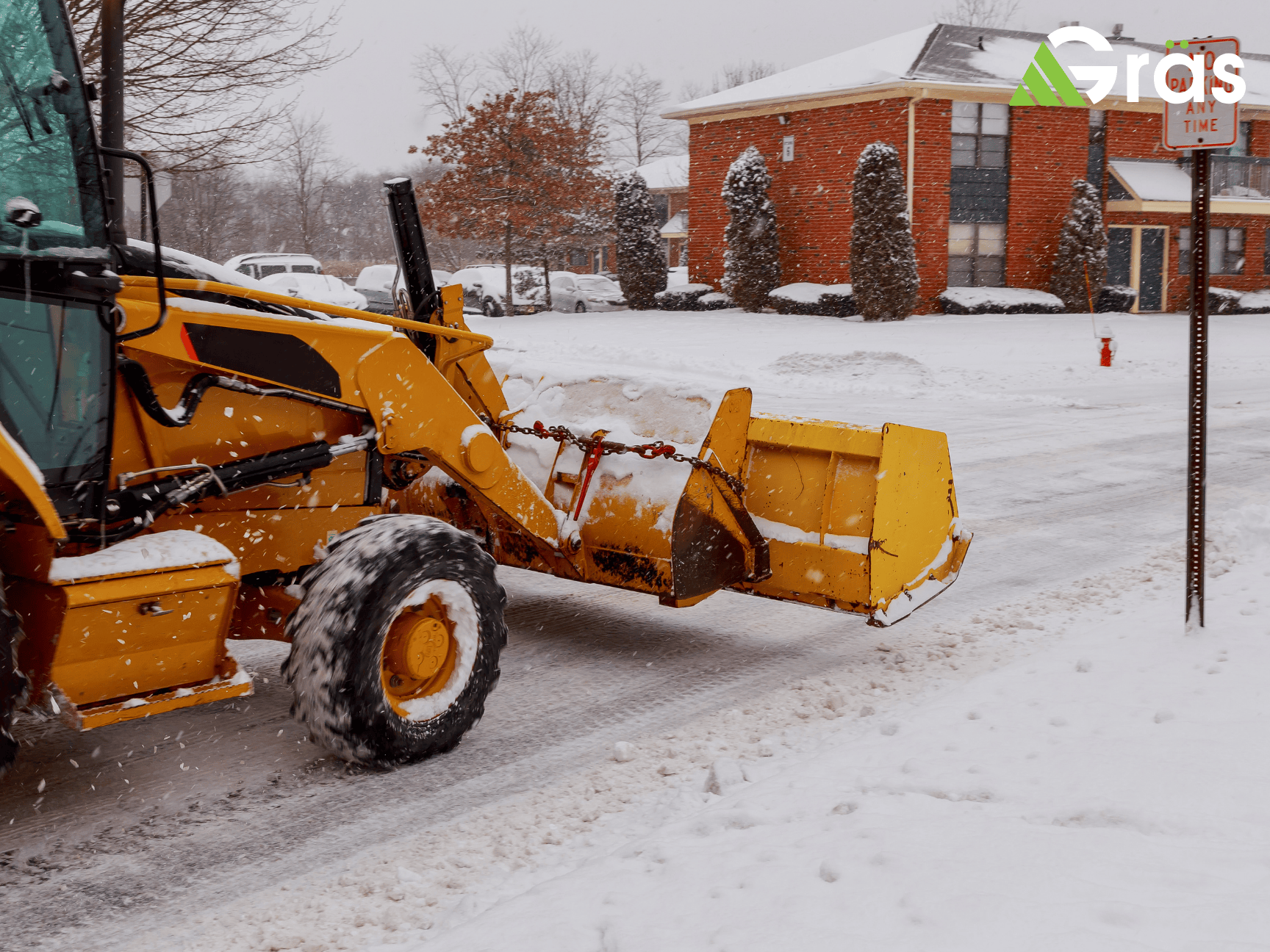
Snow Removal is the mechanical clearing of accumulated snow using plows, shovels, and snow pushes. The goal is to open parking lots, driveways, and entrance areas so traffic can resume. Snow removal typically happens during or immediately after a storm. Timing matters enormously. Snow removal during a storm (before all accumulation ends) keeps snow manageable and prevents compaction. Waiting until a storm ends means you’re fighting harder snow that’s bonded to pavement.
Ice Management is the application of de-icing materials (salt, magnesium chloride, sand) to prevent or break bond between ice and pavement. Ice management is ongoing throughout winter and often required on days with no new snow. Professional ice management includes preventive applications (treating pavement before freezing rain) and reactive treatments (breaking ice that has already formed).
Here’s what Gras Lawn typically recommends for Delaware commercial properties:
Tier 1 (Basic Coverage): Parking lot plowing and shoveling of main entrances, with salt application triggered by temperature drops below 32°F or precipitation events. Response time is 4-8 hours after a storm event ends.
Tier 2 (Standard Coverage): Tier 1 services plus 24/7 ice patrol, liquid de-icer for high-traffic areas and problematic zones, landscape protection measures, and 2-4 hour response times during active weather.
Tier 3 (Premium Coverage): Full property management including storm plowing, sidewalk and stair care, loading dock maintenance, ice control on all surfaces, 2-hour response times, and post-storm property inspections.
Most commercial properties in Wilmington and the surrounding Delaware area benefit from Tier 2, which balances cost control with safety and operational continuity. Tier 3 is recommended for multi-tenant buildings, retail centers, and properties where any access loss creates significant revenue impact.
Preparing Your Property for Winter
The best time to plan for winter is July and August, before snow companies book up and prices increase. Here’s what proactive property managers do now:
Assess drainage issues. Walk your property after summer rains. Do water pools collect in corners of your parking lot? Does ice tend to form near your building entrance? These are winter problem zones that need attention before snow season. Standing water that freezes becomes a serious slip hazard. In July, you can address drainage by fixing swales, improving grades, or installing drain inlets.
Schedule equipment maintenance. If you use in-house equipment for snow removal, now is the time for full service and repair. Plow blades should be replaced. Spreaders should be tested. De-icing salt should be stockpiled in advance of peak demand seasons. Many property managers find that outsourcing snow removal during December-March actually costs less than maintaining equipment year-round, especially if you don’t use it regularly.
Sign contracts with service providers. Reputable snow removal companies fill up their client rosters by late September. Waiting until November puts you in competition with hundreds of other properties and often means paying premium rates or accepting slower response times. Companies like Gras Lawn offer seasonal contracts that lock in pricing and guarantee service levels.
Update your snow removal plan with tenants and staff. Communicate expectations: When parking lots are cleared, when entrances are salted, what time work resumes after overnight snow, and who to call for urgent access issues. Clear communication prevents complaints and sets proper expectations for winter operations.
Verify insurance coverage. Your property insurance should include liability for snow and ice removal. Ask your agent whether snow removal service providers are required to carry their own liability insurance. They should be. A professional service provider’s insurance protects your property in case of accidental damage during snow removal.
These steps eliminate last-minute scrambling and ensure winter weather doesn’t disrupt operations.
Common Mistakes Property Managers Make in Winter
After years of managing Delaware properties, Gras Lawn has seen predictable winter mistakes that cost property managers time and money:
Over-applying salt. More salt doesn’t clear ice faster once the first application is down. Excessive salt damages concrete, kills vegetation, and harms storm drain ecosystems. A professional ice management plan uses targeted salt application based on temperature and surface conditions. Most properties need only 150-300 pounds of salt per 1,000 square feet per winter. Applying 500+ pounds wastes material and creates environmental damage.
Starting snow removal too late. Waiting for the full snow event to end before plowing means snow compacts and hardens. Early, frequent plowing (even during the storm) keeps snow manageable and prevents ice bonding underneath. Professional snow removal companies monitor weather forecasts and position equipment in advance, ready to respond when snow starts.
Ignoring entrance areas. Parking lot plowing can happen once daily, but building entrances and steps need immediate attention. Tenants and customers judge your property by the state of the main entry. Ice or snow piles at entrances create visible liability and discourage tenants from renewing leases.
Forgetting about loading docks and service areas. Standard snow removal contracts often exclude back-of-building areas where service trucks unload supplies. These areas still need clearing and ice treatment. Specify loading dock care in your contract to prevent supply chain disruptions.
Mixing incompatible de-icing products. Calcium chloride, magnesium chloride, and road salt all work differently at different temperatures. Using random products creates unpredictable results and often wastes money. Professional ice management uses a consistent product matched to Delaware’s climate.
Professional snow removal providers understand these nuances and avoid costly mistakes.
Why Delaware Businesses Choose Gras Lawn
Gras Lawn has managed winter weather for commercial properties across six states: New Jersey, Connecticut, Pennsylvania, Maryland, Florida, and Delaware. This multi-state experience gives us perspective on regional differences and proven solutions.
For Delaware specifically, we understand Wilmington’s urban parking challenges, northern Delaware’s suburban properties, and the coastal properties near Dover. We maintain equipment strategically positioned for rapid response, staff trained in local regulations, and contracts structured around your property’s specific needs.
Our approach is transparent: We assess your property, explain the three service tiers, answer questions, and propose a plan that makes sense for your budget and risk tolerance. No hidden fees. No pressure to buy services you don’t need. Learn more about our commercial landscaping services and how they integrate with winter property care.
Seasonal Timing for Winter Property Care
Winter preparation doesn’t wait until October. Smart property managers plan throughout the year. In spring, address drainage and grade issues that winter revealed. Summer is when you assess equipment needs and sign contracts. By September, service providers should have inspected your property and be ready for first snow. October and November focus on final preparations and communication with tenants.
Throughout winter, professional monitoring and responsive service keep your property safe. Spring brings post-winter inspections and repairs to any damage caused by heavy weather. This annual cycle ensures continuity and prevents surprises.
FAQ: Winter Snow Removal and Ice Management for Delaware Properties
Q1: How quickly should my parking lot be plowed after a snowstorm ends?
Ideally within 2-4 hours. Any longer and snow begins to compact, making plowing harder and creating ice risk. For commercial properties, first-light access (by 6 AM) is standard. Many property managers prefer 24-hour service to catch overnight snow before business hours.
Q2: Is road salt safe for landscaping and concrete?
Salt is safe in moderate amounts but can damage concrete and kill plants at high concentrations. Professional ice management uses targeted salt application to minimize landscape impact. Magnesium chloride is less harsh than road salt and works at lower temperatures, making it a popular choice for environmentally conscious properties.
Q3: What happens if an employee slips on ice in our parking lot?
If you have a documented snow removal service and can show you took reasonable precautions, your liability is significantly reduced. Neglecting ice management after notice of dangerous conditions exposes you to workers’ compensation claims and negligence lawsuits. Documentation of service dates and materials used provides critical legal protection.
Q4: Can we use sand instead of salt for de-icing?
Sand alone doesn’t melt ice; it only provides traction. It’s useful as a supplement but shouldn’t replace salt or magnesium chloride. Sand also clogs storm drains and requires spring cleanup, adding to long-term costs.
Q5: How much does professional snow removal cost in Delaware?
Costs vary by property size, location, and service tier. A typical 10,000 sq ft parking lot might run $150-300 per snow event plus monthly ice management fees ranging from $200-600. Contact Gras Lawn for a free property assessment and custom quote.
Don’t let winter weather disrupt your Delaware business. Gras Lawn offers professional snow removal and ice management for commercial properties across Wilmington, Dover, and northern Delaware. We handle the winter so you can focus on operations. Call today for your free consultation.