


Spring arrives in Pennsylvania, and with it comes the perfect opportunity to refresh and revitalize your commercial landscape. Whether you manage office parks, retail centers, industrial facilities, or multi-family properties across Pennsylvania, spring landscaping sets the tone for your property’s entire growing season. Gras Lawn understands the unique demands of Pennsylvania’s spring weather patterns, soil conditions, and seasonal transitions. This guide covers everything property managers and business owners need to know about spring commercial landscaping, from soil preparation to new planting strategies.
Why Spring Maintenance Matters for Pennsylvania Commercial Properties
Winter takes a toll on commercial landscapes. Snow and ice damage, soil compaction from equipment, salt residue, and dormant vegetation all require attention as temperatures rise. Spring is the ideal time to assess winter damage, correct turf problems, and implement a maintenance strategy that protects your investment through summer heat.
Pennsylvania’s spring climate presents unique challenges. March and April temperatures fluctuate dramatically, creating ideal conditions for disease and pest emergence. Soil thaws at different rates depending on slope, shade, and drainage. Properties that skip spring maintenance often struggle with disease pressure, bare patches, and weed proliferation throughout the season.
Commercial property managers who invest in comprehensive spring landscaping see immediate returns: improved curb appeal for tenant attraction, healthier turf requiring less summer irrigation, and reduced pest and disease pressure. Spring maintenance also establishes the foundation for efficient operations during peak season when landscape work becomes more expensive.
Key Spring Landscaping Tasks for Commercial Properties
Spring landscaping involves multiple coordinated tasks. A professional approach ensures nothing falls through the cracks.
Debris Cleanup and Site Inspection: Begin by removing winter debris, fallen branches, and accumulated mulch from planting beds. This inspection reveals winter damage, erosion problems, and areas needing repair. Gras Lawn teams look for branch breakage on trees and shrubs, root exposure, frost heave in beds, and damaged irrigation lines before summer demands intensive water delivery.
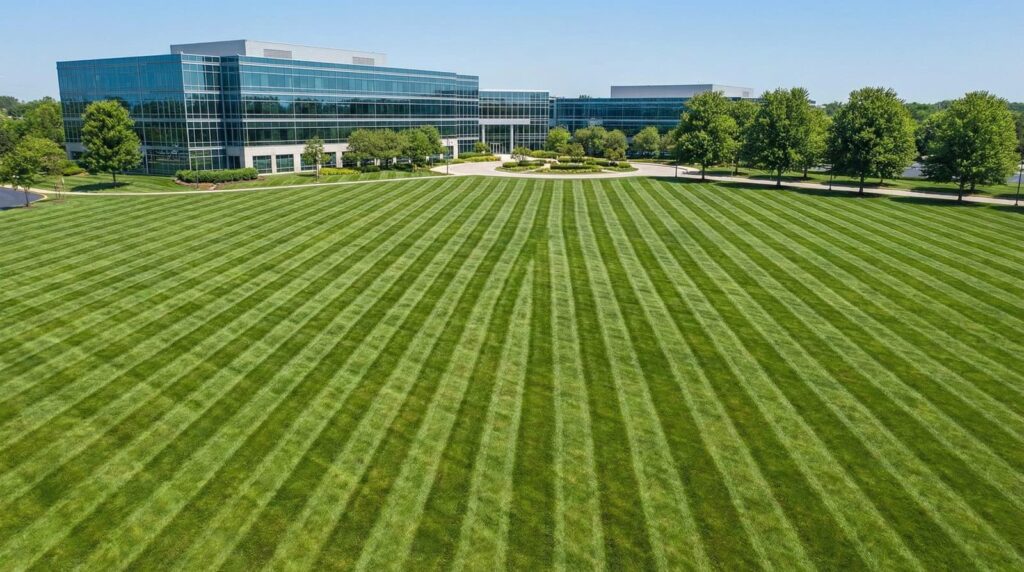
Turf Renewal and Aeration: Winter soil compaction from snow removal equipment and foot traffic reduces root penetration and water infiltration. Spring aeration opens soil pores, improving oxygen availability and water movement. For heavily trafficked commercial properties in Pennsylvania, core aeration should occur before major growth begins. Overseeding immediately after aeration fills bare patches and improves overall turf density before weeds establish.
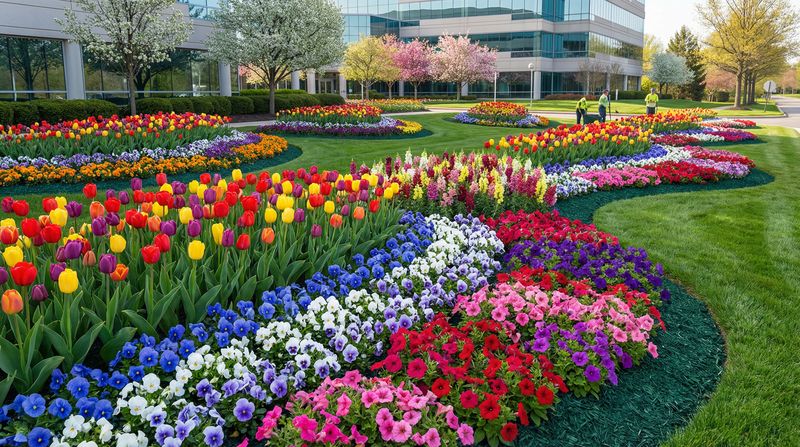
Mulch Replenishment: Winter degrades mulch through weathering and decomposition. Refresh planting beds with 2-3 inches of quality mulch. Fresh mulch improves aesthetics, regulates soil temperature, suppresses weeds, and retains moisture as temperatures rise.
Fertilization Strategy: Spring fertilization jumpstarts growth and recovers turf weakened by winter stress. Nitrogen-based products support green growth, while balanced formulations promote healthy root development. Timing matters in Pennsylvania; early spring (when soil reaches 45-50 degrees) supports steady growth, while late spring products differ from early applications.
Weed and Pre-Emergent Applications: Spring is critical for pre-emergent herbicide applications that prevent summer annual weeds from germinating. Post-emergent treatments eliminate early dandelions and other cool-season weeds. Landscape beds require pre-emergent herbicide before mulch application for maximum effectiveness.
Soil and Lawn Assessment After Winter
Before implementing any treatment plan, assess the actual condition of your turf and landscape soil. Visual inspection reveals only part of the story.
Soil Testing: Winter activity compresses soil and alters pH and nutrient balance. Professional soil testing in spring provides exact recommendations for fertilization, lime application, and amendment needs. Pennsylvania soils often run acidic; testing confirms whether lime application is necessary. Results guide your fertilization strategy and prevent over-application waste.
Turf Density and Coverage: Walk the property and note bare patches, thin areas, and problem zones. Mark locations for overseeding or sod repair. Heavy-traffic areas near building entrances, under shade canopies, and along drive lanes typically show winter damage first. Plan targeted repairs before spring growth accelerates.
Disease Assessment: Early spring diseases like snow mold, leaf spot, and fungal growth appear as property temperatures stabilize. Identify these issues before they spread, and implement fungicide treatments if necessary. Proper air circulation, drainage improvement, and cultural practices (correct mowing height, irrigation timing) prevent most spring diseases.
Drainage Evaluation: Spring thaw and rain expose drainage problems. Observe where water pools after rain or irrigation. Standing water kills turf and promotes disease. Address drainage issues early; delaying creates season-long problems and significantly increases repair costs.
Spring Tree and Shrub Care
Trees and shrubs form the backdrop of your landscape and deserve dedicated spring attention. Proper care extends plant life, improves appearance, and reduces liability risks.
Pruning and Shaping: Spring is ideal for pruning dormant trees and shrubs before new growth begins. Remove dead, diseased, or damaged branches. Shape plants according to design intent. Early spring pruning prevents new growth from being immediately removed and allows trees and shrubs to respond with vigorous healthy shoots.
Fertilization: Spring fertilization supports strong branch growth and establishment. Slow-release products feed throughout the growing season, supporting consistent development. Avoid excessive nitrogen, which promotes soft new growth susceptible to pest damage.
Mulch Ring Renewal: Tree and shrub beds require fresh mulch each spring. Keep mulch 3-4 inches from tree trunks to prevent bark rot and pest harbor. Proper mulch management extends landscape life and reduces pest and disease pressure.
Pest Inspection: Spring brings emerging insects and mites. Inspect plants for egg masses, pest activity, and early damage. Early identification and treatment prevent season-long pest pressure that degrades plant health and appearance.
Planning for Peak Season
Spring landscaping establishes systems and practices that carry your property through summer. Think of spring as the foundation for everything ahead.
Irrigation System Preparation: Test and repair irrigation systems before heat arrives. Winterization damage, freeze-crack pipes, and controller issues need attention before peak irrigation season. Properly functioning irrigation reduces disease pressure, maintains turf color despite heat, and reduces overall water waste. Modern commercial systems include smart controllers that adjust watering based on rainfall and temperature, reducing water costs significantly.
Equipment and Staffing Assessment: Peak season requires adequate crew size and equipment availability. Spring is the time to ensure mowers, edgers, blowers, and maintenance equipment are serviced, sharpened, and ready. Understaffed crews miss quality standards and allow weeds and disease to escalate.
Weed Management Strategy: Spring weed management pays dividends all season. Aggressive removal and pre-emergent application prevent weed populations from becoming unmanageable by July. Consult with your landscape team about the most effective strategy for your property type and specific problem weeds. Learn more about Gras Lawn’s commercial landscaping services in Pennsylvania.
Frequently Asked Questions About Spring Commercial Landscaping in Pennsylvania
When is the best time to overseed in Pennsylvania?
Early spring, as soon as soil reaches 50-55 degrees and active growth begins, provides excellent establishment time. Cool-season grasses germinate quickly in spring moisture and heat is still manageable. Avoid overseeding too late in spring; new seedlings struggle during summer heat.
Should I fertilize my turf before or after aeration?
Apply pre-aeration fertilizer about 2 weeks before aeration. Post-aeration applications can follow immediately after and should be balanced formulations. This dual approach feeds existing turf and provides nutrients to new growth from aeration and overseeding.
How often should commercial properties in Pennsylvania aerate?
High-traffic commercial properties benefit from annual spring aeration. Lower-traffic properties might aerate every 2-3 years. Assessment of soil compaction determines specific needs; your landscape professional can recommend frequency based on actual conditions.
What is the right mulch depth for spring applications?
Apply 2-3 inches of quality mulch in landscape beds. This depth suppresses weeds, regulates soil temperature, and retains moisture without smothering plants or creating pest harbors. Keep mulch several inches away from tree trunks.
Can I apply pre-emergent and fertilizer at the same time?
Yes, combination products exist that include both pre-emergent herbicide and fertilizer, reducing application costs and improving convenience. Check with your landscape provider about product availability and proper timing for your specific property.
Contact Gras Lawn for Expert Spring Landscaping in Pennsylvania
Spring commercial landscaping requires expertise, timing, and equipment that property managers rarely have in-house. Gras Lawn’s professional teams manage spring landscape work across Pennsylvania, Connecticut, New Jersey, Delaware, Maryland, and Florida. We understand regional climate patterns, soil conditions, and seasonal timing that determine success.
Whether your property needs comprehensive spring renewal, specialized services like aeration and overseeding, or ongoing maintenance through peak season, Gras Lawn delivers professional results. Contact Gras Lawn today to schedule your spring landscape assessment and discover how proper spring maintenance protects your property investment and creates the landscape you want.