


HOA Landscape Maintenance in Connecticut: Summer Care Guide for Property Managers
As a Connecticut HOA property manager, you know that summer brings unique landscaping challenges. Heat stress, increased foot traffic, and pest pressure test your grounds maintenance team. This guide covers everything you need to keep Connecticut HOA properties looking sharp and healthy through June, July, and August.
Why Summer Landscaping Maintenance Matters for Connecticut HOAs
Connecticut’s humid subtropical summer climate requires active management. Turfgrass struggles with heat, humidity, and disease pressure when neglected. Property values decline visibly when landscaping falters. Residents notice brown patches, overgrown shrubs, and weed invasions before they notice anything else.
Gras Lawn has maintained commercial properties across Connecticut for years. Summer landscaping isn’t about reactive mowing. It’s about preventing problems before residents complain. A well-maintained HOA landscape signals property value, attracts renters, and reduces turnover.
The investment in summer maintenance pays dividends. Properly maintained turf resists disease, requires less emergency care in fall, and costs far less than spring renovation. Connecticut HOA boards that skip summer maintenance spend heavily in September and October fixing preventable damage.
Research shows that well-maintained landscapes increase property values by 5 to 10 percent. For HOAs, this translates directly to resident satisfaction and reduced vacancy rates. The cost of professional summer maintenance is minimal compared to the revenue impact of a neglected property.
Lawn Mowing and Striping for Connecticut HOA Properties
Consistent mowing forms the foundation of HOA landscaping. Weekly mowing during Connecticut’s peak growing season (May through September) keeps turf at optimal height and appearance. The frequency ensures grass remains uniform, healthy, and visually attractive.
Height matters significantly. Connecticut cool-season grasses perform best when maintained at 3 to 3.5 inches. Cutting below 3 inches stresses turf, reduces root depth, and invites weeds and disease. Overgrown lawns look neglected and collect clippings that smother the grass underneath, promoting fungal issues and bare patches.
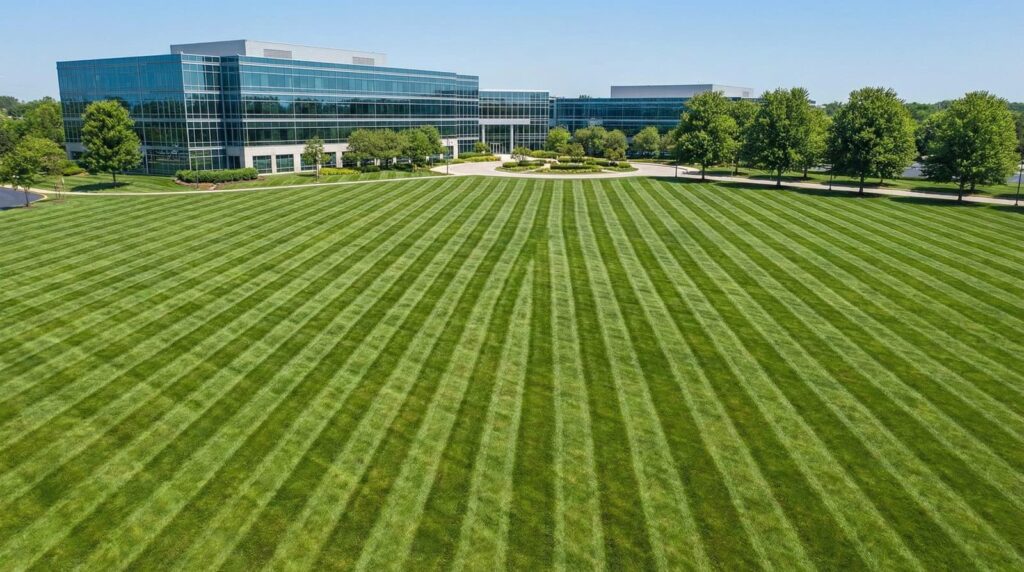
Striping and pattern mowing elevate HOA curb appeal beyond standard mowing. Professional striping creates visual interest that residents recognize immediately. The contrast between mowed strips signals attention to detail and professional management. Gras Lawn’s striping services use specialized mowing equipment with rollers that bend grass blades in alternating directions, creating the classic professional pattern across common areas, entryways, and around buildings.
The visual impact of striped lawns extends beyond aesthetics. Potential renters and visitors perceive striped lawns as more expensive and better-managed properties. This perception supports HOA property values and resident pride. Striping also helps landscape teams track which areas have been mowed and prevents missed sections.
Mulching versus bagging depends on conditions. During peak growth, mulching (leaving clippings on the lawn) returns nitrogen to soil and reduces waste. This approach saves time and disposal costs. After heavy rain or during rapid growth periods, bagging prevents clippings from piling up and smothering turf underneath. A balanced approach typically involves mulching 80 percent of the season and bagging after heavy rain events.
Deck height adjustments prevent scalping on slopes and uneven terrain. Connecticut HOAs often feature varied topography, and consistent mowing height across all grades requires equipment calibration. Professional mowing crews make height adjustments mid-season as turf growth patterns change.
Heat Stress and Irrigation Management in Summer
Connecticut summers bring periods of intense heat. When temperatures exceed 85 degrees Fahrenheit for extended periods, cool-season grasses enter dormancy or stress significantly. Inadequate watering during heat stress causes permanent thinning, bare patches, and weed invasion as desirable turf weakens.
Irrigation timing prevents heat stress damage more effectively than guessing and hoping. Early morning watering (before 8 AM) reduces evaporation and allows soil to absorb moisture before peak heat sets in. Afternoon watering mostly evaporates into the air before reaching roots. Evening watering can promote fungal diseases by leaving foliage wet overnight.
Deep, infrequent watering encourages deeper root systems that withstand heat and drought better than frequent, shallow watering. A single deep watering weekly penetrates soil 6 to 8 inches, encouraging roots to grow downward. Shallow daily watering keeps roots near the surface, making turf more vulnerable when water supply stops.
Soil moisture monitoring prevents both over and under-watering. Compacted or clay-heavy soils common in Connecticut may require longer soak times to achieve deep penetration. Sandy soils drain quickly and may need more frequent irrigation. Soil conditions drive watering decisions more than calendar schedules.
Many Connecticut HOAs rely on sprinkler systems installed decades ago. Aging systems develop dead zones with poor coverage, uneven spray patterns, and inefficient water distribution. Some zones deliver twice the water needed while others deliver half. Gras Lawn conducts comprehensive irrigation audits to identify problem areas and optimize coverage for peak-season needs. We adjust spray heads, repair leaks, reprogram controllers for seasonal adjustments, and recommend updates when systems can no longer meet property needs efficiently.
Mulching landscape beds protects soil moisture and suppresses weeds. A 2 to 3 inch layer of quality mulch reduces water loss through evaporation, keeps soil temperatures down during heat, and moderates soil temperature during cool periods. Fresh mulch also refreshes the appearance of planting beds around buildings and entryways, contributing to overall property aesthetics.
Weed Control and Pest Management
Summer heat activates problem weeds and pests that dormant in cool seasons. Crabgrass seeds germinate in spring, but visible crabgrass patches explode in July and August when heat stresses desirable turf and creates perfect conditions for invasion. Pre-emergent applications applied in May prevent crabgrass from germinating, but post-emergent control targets established plants already visible in June and July.
Broadleaf weeds including clover, plantain, dandelion, and chickweed thrive in summer. Selective herbicides target broadleaf species without harming turf. Timing matters significantly: early morning applications work better than afternoon sprays when heat reduces product effectiveness. Cool, humid conditions enhance herbicide performance, making spring and fall more effective than peak summer, but summer control prevents seed production.
Insect pressure peaks in July and August. Chinch bugs, sod webworms, and grubs weaken turf during heat stress, creating visible damage patterns and brown areas. Early detection prevents population explosions that require more intensive treatments. Gras Lawn scouts landscapes regularly for insect damage, identifies species accurately, and applies targeted treatments when population thresholds warrant intervention.
Fungal diseases including dollar spot, rust, and brown patch emerge during humid periods typical of Connecticut summers. Proper mowing height, improving air circulation through crown thinning, and avoiding overhead irrigation late in the day reduce disease pressure significantly. In severe cases, fungicide applications protect turf during vulnerable periods, though cultural practices prevent most disease issues.
Shrub and Ornamental Bed Care
Ornamental plantings around HOA buildings and entryways set the visual tone for the entire property. Summer heat stresses newly planted material significantly and forces older plantings into dormancy without supplemental water. Attention to ornamental care extends landscape life and maintains curb appeal.
Summer pruning shapes shrubs without promoting flush new growth that’s vulnerable to frost in fall. Timing is critical: pruning too late in summer stimulates growth that won’t harden before freezing temperatures. Pruning too early wastes energy as plants re-flush growth. Late June and early July timing balances these concerns for Connecticut properties.
Deadheading flowering plants extends bloom periods and maintains appearance. Regular removal of spent flowers signals the plant to produce more blooms rather than focusing energy on seed production. Residents notice deadheaded beds as more vibrant and colorful than neglected alternatives.
Trimming overgrown branches improves sight lines around buildings, enhances safety, and reduces pest habitat. Overgrown shrubs hide pest problems and create dark areas where rodents shelter. Well-maintained shrubs look intentional and cared for.
Mulch in planting beds moderates soil temperature, suppresses weeds, and improves appearance. Fresh mulch annually refreshes tired beds and covers areas where previous mulch has decomposed. Landscape fabric under mulch reduces maintenance but degrades over time and can create weed problems on top of the fabric.
Fertilizing ornamental plantings supports growth without pushing excessive flush growth that invites pests and diseases. Balanced fertilizers applied in early summer sustain plantings through peak-season stress. Avoid high-nitrogen fertilizers in midsummer that promote soft growth vulnerable to heat and disease.
Hardscape Maintenance for Connecticut HOAs
Patios, walkways, and parking areas accumulate algae, moss, and stains in Connecticut’s humid climate. Pressure washing cleanses hardscapes and eliminates slipping hazards created by algae growth. Regular cleaning prevents buildup that becomes more difficult and expensive to remove if left to accumulate.
Sealants protect pavers and concrete from weathering and stain penetration. Sealed surfaces shed water more effectively, reducing freeze-thaw damage that Connecticut winters bring. Sealed pavers resist oil stains and easier to maintain. Sealing extends pavement life and reduces long-term maintenance costs.
Edging turf along beds and sidewalks maintains clean lines that define landscape structure. Overgrown turf creeping into beds looks unmaintained and unprofessional. String trimming weekly around buildings, lamp posts, and parking lot perimeters keeps properties looking sharp and organized.
Gravel and mulch paths settle and compact over seasons. Top-dressing refreshes mulch color and depth. Gravel path maintenance prevents ruts and keeps pathways safe for residents and visitors.
Tree Care in Connecticut Summer
Young trees need consistent watering during establishment. Deep watering once weekly during peak summer prevents transplant failure and supports strong root development. Adequate water during the first three years after planting determines long-term tree success.
Deadwood removal improves tree health and safety. Spring thunderstorms common in Connecticut leave broken branches and split crotches. Dead limb removal prevents further decay, eliminates habitat for boring insects, and improves the tree’s appearance.
Crown thinning improves air circulation and reduces wind resistance. Heavy crowns collect more storm damage and create dense shade that prevents turf growth beneath trees. Professional arborists thin crowns to enhance health without harming structure, maintaining the tree’s natural form while improving function.
Preparing for Fall Before Summer Ends
Neglect during summer creates emergency work in fall. Uncontrolled summer growth means cleanup instead of preparation. Damaged turf from heat stress and disease requires heavy renovation work and seeding budgets in fall, multiplying costs.
July and August are the time to identify and address problems proactively. Bare patches in turf get seeded in late August or early September when cooling temperatures and improving moisture conditions favor germination. Late-summer fungicide applications prevent disease from spreading through fall dormancy into next spring.
End-of-summer fertilization should avoid nitrogen-heavy applications that push soft growth vulnerable to freezing. Balanced or phosphorus-rich fertilizers strengthen turf going into dormancy. This approach supports winter survival and spring green-up with minimal disease risk.
Why Choose Gras Lawn for Connecticut HOA Maintenance
Gras Lawn maintains HOA properties across Connecticut. We understand local growing conditions, pest pressures, and seasonal challenges specific to Connecticut’s climate and landscape. Our teams handle routine mowing, comprehensive landscape care, and specialized services like irrigation optimization and pest management.
We work with HOA boards and property management companies on sustainable plans that balance appearance, cost, and environmental stewardship. Whether you need weekly mowing, landscape design consultation, or emergency post-storm cleanup, Gras Lawn delivers consistent results that keep residents satisfied.
Frequently Asked Questions About Connecticut HOA Landscaping
Q: How often should Connecticut HOAs mow during summer?
A: Weekly mowing maintains proper grass height and appearance during peak growing season (May through September). Frequency may increase after heavy rain or slow during very dry periods when growth slows.
Q: What’s the best time to water Connecticut landscapes in summer?
A: Early morning watering (before 8 AM) reduces evaporation and allows soil to absorb moisture before peak heat. Avoid afternoon watering when most moisture evaporates without reaching roots, and avoid evening watering which promotes fungal disease.
Q: Can we reduce landscaping maintenance costs without sacrificing appearance?
A: Strategic pruning, mulching, and targeted pest management reduce long-term costs significantly. Preventive care in summer costs far less than emergency renovation work in fall.
Q: How do we handle heat-stressed turf in Connecticut during August?
A: Consistent deep watering, high mowing heights (3 to 3.5 inches), and reducing foot traffic on stressed areas help turf survive heat. Avoid fertilizing or applying treatments that stress turf further during peak heat.
Q: What’s the best mulch depth for Connecticut HOA beds?
A: Two to three inches of quality mulch suppresses weeds and retains soil moisture without smothering plants or preventing water penetration. Learn more about professional landscaping services tailored to your property’s specific needs.
Contact Gras Lawn for Connecticut HOA Landscaping Services
Connecticut HOA properties deserve professional maintenance that residents notice and appreciate. Gras Lawn offers comprehensive landscaping services including weekly mowing, professional striping, landscape design consultation, irrigation management, and seasonal maintenance planning tailored to your property’s specific needs.
Contact Gras Lawn today to discuss your Connecticut HOA landscaping requirements and schedule a consultation with our experienced property management specialists.